

Our Services
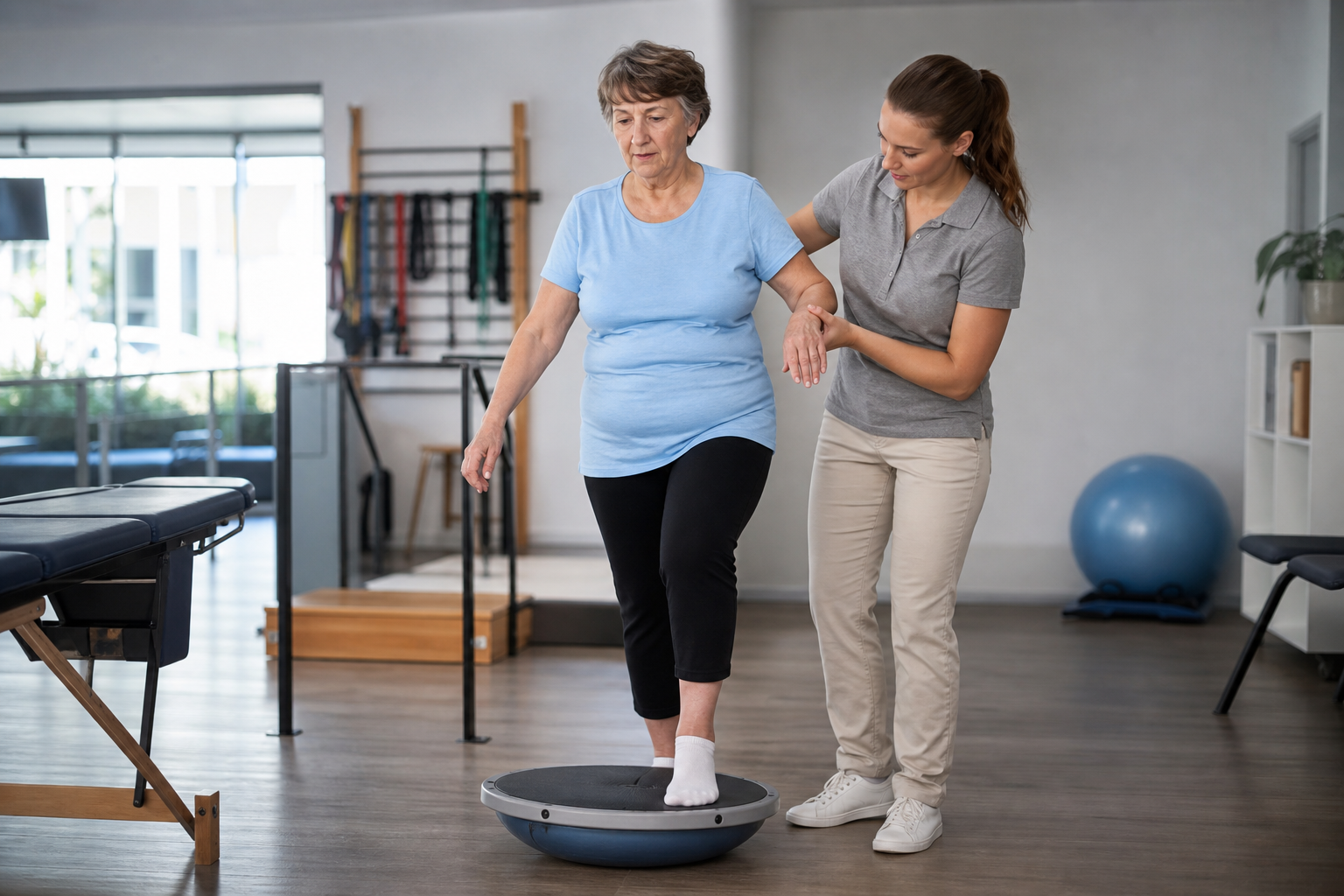
Balance & Fall Prevention
Balance and fall prevention programs assess why you feel unsteady and train the systems that keep you upright: vision, inner ear, strength, and reaction time.
What this treatment helps with
- Greater confidence walking
- Stronger legs and core
- Faster balance reactions
- Safer home and community mobility
How we assess you
Every plan starts with a clear picture of your symptoms, movement, and goals.
-
1
Fall history
We review past falls, medications, and home hazards.
-
2
Balance tests
Timed stands, tandem walk, and reach tests show baseline risk.
-
3
Strength screen
Leg power and ankle stability predict steadiness.
-
4
Goal plan
We target tasks that matter: stairs, snow, or crowded spaces.
How we treat your condition
Techniques are chosen from your assessment, not a one size fits all menu.
Static balance
Narrow base and single leg holds with support as needed.
Dynamic drills
Walking turns, stepping over obstacles, and dual tasks.
Strength work
Sit to stand, calf raises, and hip abductor training.
Home safety tips
Simple changes to reduce trip hazards.
Typical recovery timeline
Timelines vary by person. These phases show what many patients experience.
Confidence
Week 1 to 3Feel steadier on even ground with guided drills.
Challenge
Week 4 to 8Uneven surfaces and faster reactions.
Independence
Week 8+Home program and optional maintenance classes.
Patient case studies
Real recovery paths from our Calgary clinic. Names and details are changed for privacy.
Retiree, 72 Near falls on icy sidewalks 12 weeks
Balance testing showed slow reactive stepping and weak quadriceps on both sides. We used single leg stands, tandem walking, sit to stand power drills, and outdoor practice on uneven paths with a walking pole for confidence.
Near falls on icy sidewalks stopped after six weeks of consistent practice. She used a cane through winter and walked neighborhood paths independently by spring. She still does her home balance routine three times per week.