

Our Services
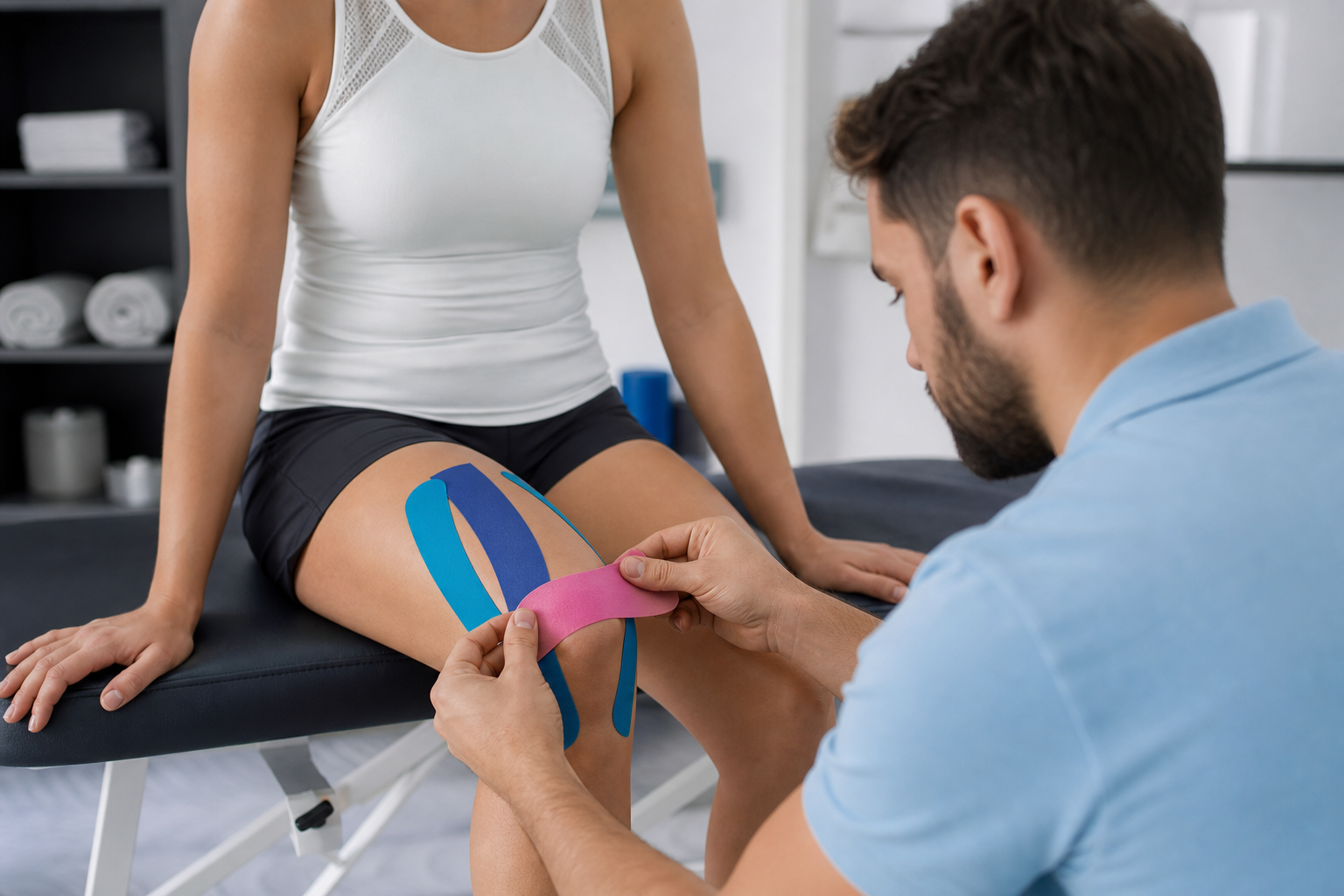
Kinesio Taping
Kinesio taping uses flexible tape to give light support and sensory feedback. It helps some patients move with less pain while they build strength through exercise.
What this treatment helps with
- Light support without rigidity
- Pain relief during movement
- Posture and movement cues
- Wearable for several days
How we assess you
Every plan starts with a clear picture of your symptoms, movement, and goals.
-
1
Movement test
We see if tape changes pain or control during key tasks.
-
2
Skin check
We confirm no allergy or irritation before application.
-
3
Goal match
Tape used when it supports exercise goals, not as a crutch.
-
4
Teach self care
We show how to remove tape safely.
How we treat your condition
Techniques are chosen from your assessment, not a one size fits all menu.
Pain relief taping
Decompressive strips over sore areas.
Support taping
Facilitation patterns for weak muscles.
Postural taping
Gentle reminders for desk or sport posture.
Exercise pairing
Tape worn during rehab drills when helpful.
Typical recovery timeline
Timelines vary by person. These phases show what many patients experience.
Support
Week 1Tape plus modified activity.
Strength
Week 2 to 4Less reliance on tape as muscles activate.
Independence
Week 4+Tape optional for sport or heavy days.
Patient case studies
Real recovery paths from our Calgary clinic. Names and details are changed for privacy.
Volleyball player, 24 Shoulder pain when serving 5 weeks
Scapular dyskinesis was contributing to pain during the serving motion. Kinesio tape supported better shoulder positioning during early rehab while she completed a rotator cuff and scapular stability program three times per week.
She served a full match with tape support by week three without post match pain. By mid season she competed pain free without tape and maintained her starting position. She still tapes for tournament weekends as a preventive measure.