

Our Services
Physiotherapy
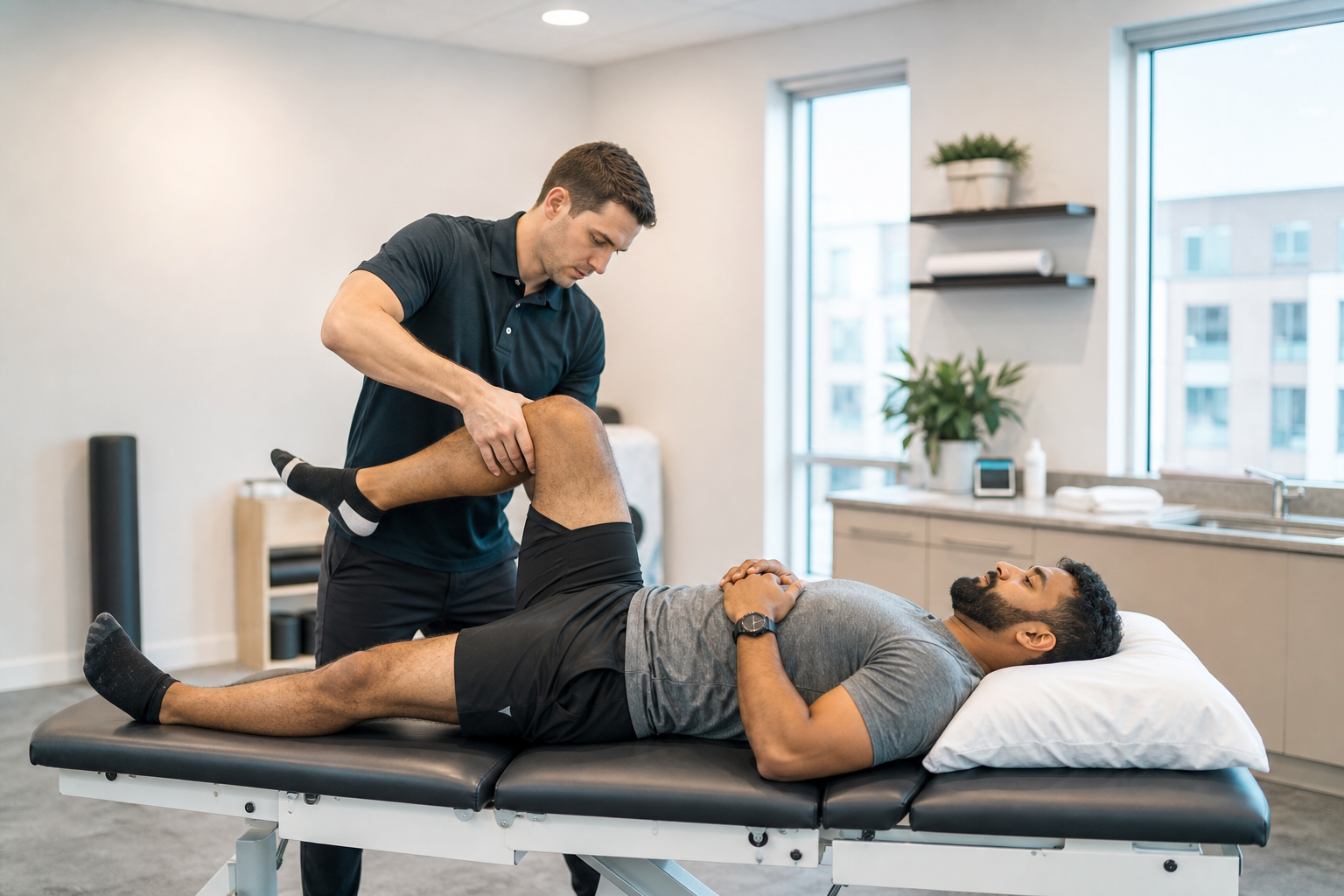
Physiotherapy helps you move with less pain and more confidence. We assess how your body moves, identify what is driving your symptoms, and build a plan that fits your daily life, work, and activity goals.
What this treatment helps with
- Pain relief and improved movement
- Clear home exercise plan
- Progress tracked each visit
- Return to work and sport safely
How we assess you
Every plan starts with a clear picture of your symptoms, movement, and goals.
-
1
Health history
We review your pain pattern, past injuries, work demands, sleep, and activity level.
-
2
Movement screen
We watch how you bend, walk, squat, and reach to find movement limits.
-
3
Hands on testing
Joint, muscle, and nerve tests help us pinpoint the source of symptoms.
-
4
Goal setting
You tell us what success looks like. We set realistic milestones together.
How we treat your condition
Techniques are chosen from your assessment, not a one size fits all menu.
Manual therapy
Joint mobilisation and soft tissue work to reduce stiffness and pain.
Exercise therapy
Targeted strengthening and mobility drills you can repeat at home.
Pain education
We explain what is happening so you know what helps and what to avoid.
Activity planning
We adjust load for work, sport, and daily tasks as you improve.
Typical recovery timeline
Timelines vary by person. These phases show what many patients experience.
Calm symptoms
Week 1 to 2Reduce pain flare ups and restore basic movement.
Rebuild strength
Week 3 to 6Progress loading with guided exercises and hands on care.
Return to activity
Week 6 to 12Sport or work specific drills and independence plan.
Patient case studies
Real recovery paths from our Calgary clinic. Names and details are changed for privacy.
Office worker, 42 Lower back pain after long desk hours 8 weeks
We started with a movement screen and found limited hip hinge and weak deep core activation after long sitting. Treatment combined manual therapy for the lower back, progressive core stability drills, and a simple desk break routine every 45 minutes.
Daily pain dropped from a 7 to a 2 within five weeks. He returned to gym training with a modified program and now manages occasional flare ups with his home exercises. He has not missed work since finishing the plan.
Recreational runner, 29 Knee pain during longer runs 10 weeks
A running gait review showed early heel strike and weak left glute medius. We used hip strengthening, cadence cues, and a graded return from walk run intervals to full distance over eight weeks.
Knee pain during runs resolved by week six. She completed a local 10K without pain and continues a twice weekly strength routine to stay injury free. Her longest run is now back to pre injury distance.