

Our Services
Joint Mobilisation
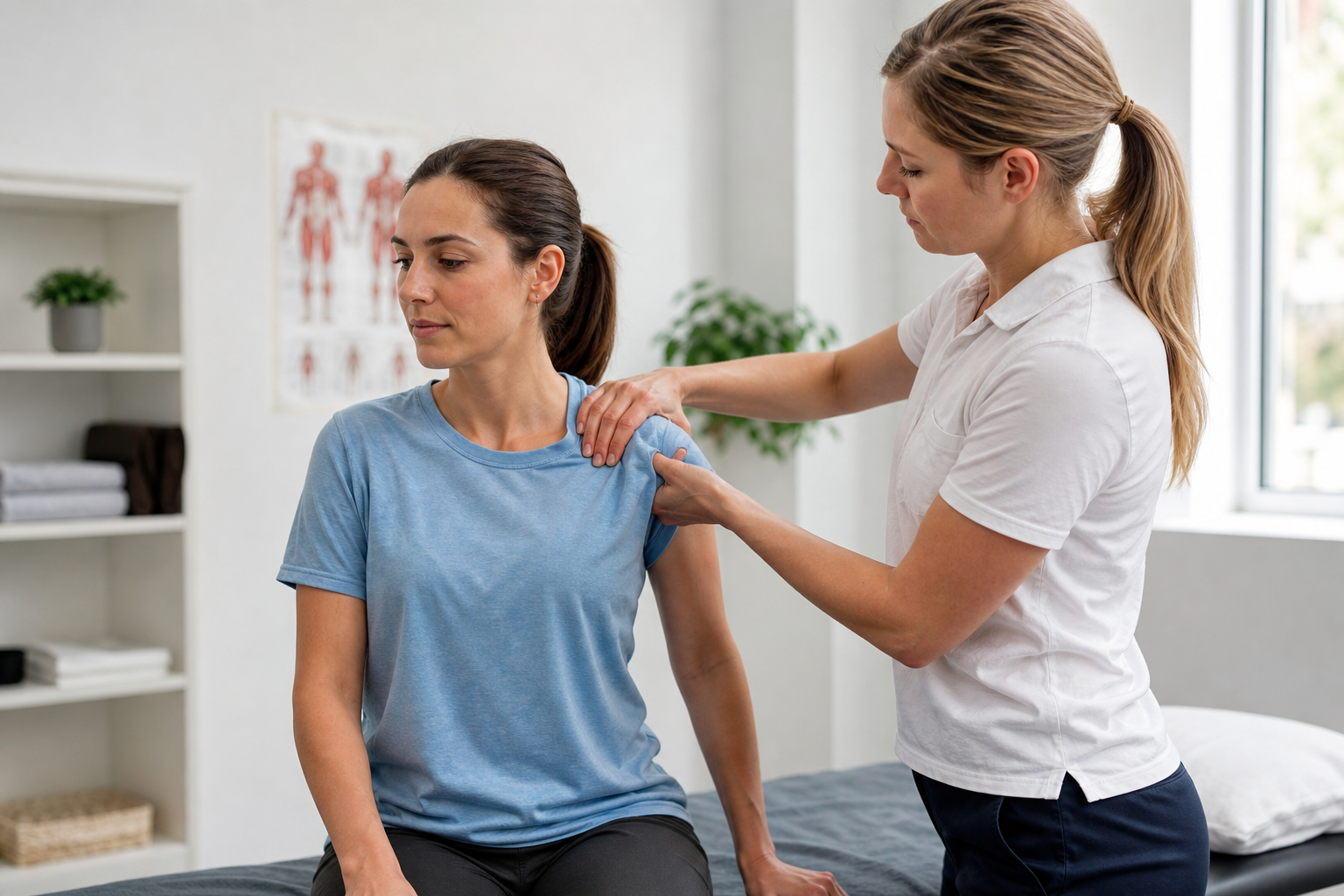
Joint mobilisation applies controlled pressures to stiff joints so they move more freely. It is graded from light to firm based on your comfort and tissue irritability.
What this treatment helps with
- Less joint stiffness
- Smoother daily movement
- Better exercise tolerance
- Pairs with strengthening
How we assess you
Every plan starts with a clear picture of your symptoms, movement, and goals.
-
1
Joint scan
We test each affected joint’s range and end feel.
-
2
Irritability check
We note if tissues are easily flared to set treatment intensity.
-
3
Functional link
We connect joint limits to tasks like dressing or driving.
-
4
Plan
We choose grade of mobilisation and supporting exercises.
How we treat your condition
Techniques are chosen from your assessment, not a one size fits all menu.
Oscillatory mobilisation
Rhythmic joint movements to reduce pain and stiffness.
Sustained glide
Held pressures at range limits when appropriate.
Muscle release
Soft tissue work around guarded joints.
Active range
You move through new range immediately after treatment.
Typical recovery timeline
Timelines vary by person. These phases show what many patients experience.
Opening range
Week 1 to 2Easier basic movements like turning the neck or bending the knee.
Loading
Week 3 to 5Strengthen through improved range.
Maintenance
Week 5+Home mobility routine keeps joints moving.
Patient case studies
Real recovery paths from our Calgary clinic. Names and details are changed for privacy.
Cyclist, 48 Stiff ankle after sprain months ago 7 weeks
Ankle dorsiflexion was limited months after the sprain, affecting his pedal stroke. We combined grade III ankle mobilisations, calf eccentric loading, and a cycling progression from trainer to short outdoor rides as range improved.
Morning ankle stiffness resolved by week five. He restored a full smooth pedal stroke and completed a 50K charity ride without swelling afterward. He keeps up calf mobility work before longer rides.